
Some minds follow a map. Others draw one.
There's an interesting difference that often becomes apparent when you spend time with home-educated young people. It isn't necessarily that they know more than children in mainstream schools, or that they're somehow more intelligent. It's that they often approach the world differently.
Many have become accustomed to asking questions simply because they've had the time and freedom to do so. Their learning doesn't always stop when the timetable says it should. If something captures their imagination, they can follow it for hours, days or even weeks, making connections that would be difficult to accommodate within a structured curriculum.
That isn't a criticism of mainstream education. Schools have an incredibly difficult task. They have national curricula to deliver, examinations to prepare pupils for, safeguarding responsibilities, budget constraints and classrooms filled with children who all learn in different ways. A degree of standardisation is inevitable.
The challenge is that education designed to work for everyone cannot always nurture the particular interests of each individual.
Home education naturally creates different conditions. A child's fascination with astronomy might lead to mathematics, history, engineering, and philosophy in the same afternoon. An interest in animals may become an exploration of biology, conservation, business, and photography. Learning is often less compartmentalised because life itself isn't divided into 50-minute lessons.
More importantly, there’s space for curiosity.
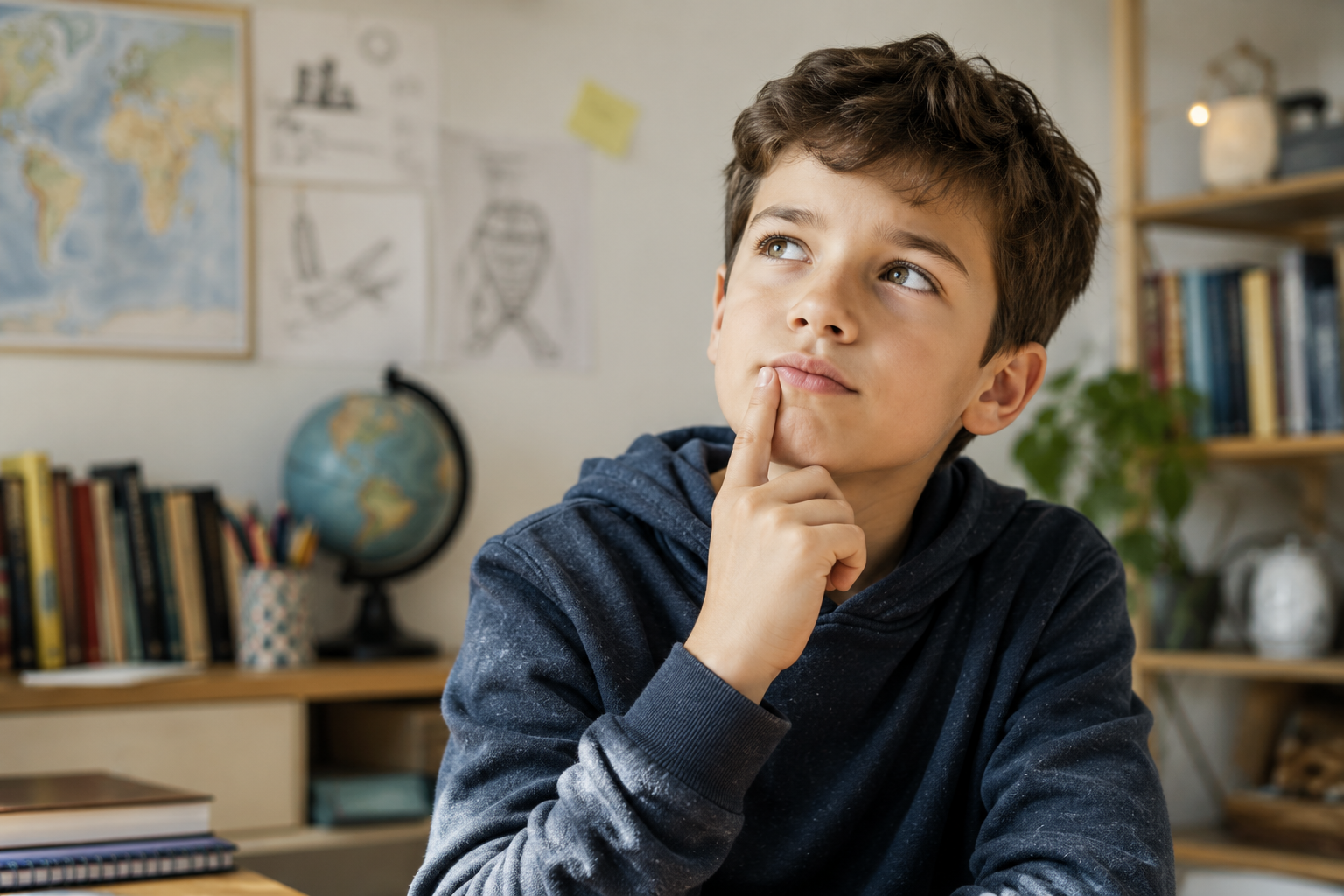
Curiosity isn't simply about asking more questions. It's about becoming comfortable not knowing the answer. It's about exploring ideas without worrying whether they're likely to appear on an exam paper. That habit of mind often carries into adulthood, because people who become used to investigating possibilities rarely stop doing so.
For many young people in mainstream education, success is understandably presented as a linear journey. Work hard, pass your GCSEs, then complete A-levels or college. Go to university or secure employment. It's a sensible pathway that serves millions of people well.
But it isn't the only pathway.
Relatively few young people grow up believing that creating their own business is something they could realistically do. Entrepreneurship often feels like a destination reserved for older people with decades of experience, substantial savings or exceptional confidence. It isn't usually presented as a genuine first option.
For some home-educated young people, however, that possibility can feel much more natural. Growing up outside of conventional structures often means seeing that there are multiple ways to build a life. If learning has already looked different, perhaps work can, too.
That's particularly important for those who worry about formal qualifications.
Many home-educated students do sit GCSEs and achieve excellent results. Others choose different routes altogether. It's understandable that parents may worry about whether employers will overlook capable young people simply because their educational journey doesn't fit familiar expectations.
Employment isn't the only measure of success.
If traditional doors prove harder to open, building your own door becomes an entirely legitimate response.
Entrepreneurship isn't about rejecting employment or believing everyone should work for themselves. It simply recognises that creating value for other people doesn't always require someone else to offer you permission first. A young person who can identify problems, think creatively, and communicate well already possesses many of the foundations businesses are built upon.
Those qualities are becoming even more valuable as artificial intelligence becomes part of everyday life.
There's understandable concern that AI will do the thinking for us. In reality, AI is remarkably good at helping people explore ideas, organise information, and test possibilities. What it cannot supply is genuine curiosity.
AI doesn't wake up wondering whether there's a better way of solving a problem. It doesn't notice an opportunity in a local community. It doesn't question assumptions unless somebody asks it to. Every meaningful prompt begins with a human being deciding what’s worth exploring.
That means the quality of AI's output is often shaped by the quality of the thinking that comes before it.
A mind that has become comfortable asking questions will usually get far more from AI than one that simply waits for answers. Someone who enjoys exploring different viewpoints will use AI to challenge their own assumptions rather than simply confirm them. Used well, AI becomes less of a replacement for thinking and more of a partner in it.
Perhaps that's the conversation education needs to have.
Whether a child attends mainstream school or is educated at home matters less than whether they're encouraged to remain curious. Qualifications matter. Knowledge matters. Skills matter. But so does the confidence to ask, ‘What if there's another way?’
The world our young people are entering is changing faster than any curriculum can realistically keep pace with. Some of the jobs they'll eventually do don't exist yet. Many of the problems they'll solve haven't yet appeared.
Preparing them for that future isn't simply about teaching them what we already know. It's about helping them become the kind of people who can keep learning long after education officially ends.
Perhaps the greatest advantage we can give any young person isn't a particular qualification or career plan. It's the confidence to explore possibilities, the judgement to think independently and the belief that, when the path in front of them doesn't quite fit, they're capable of creating one of their own.