
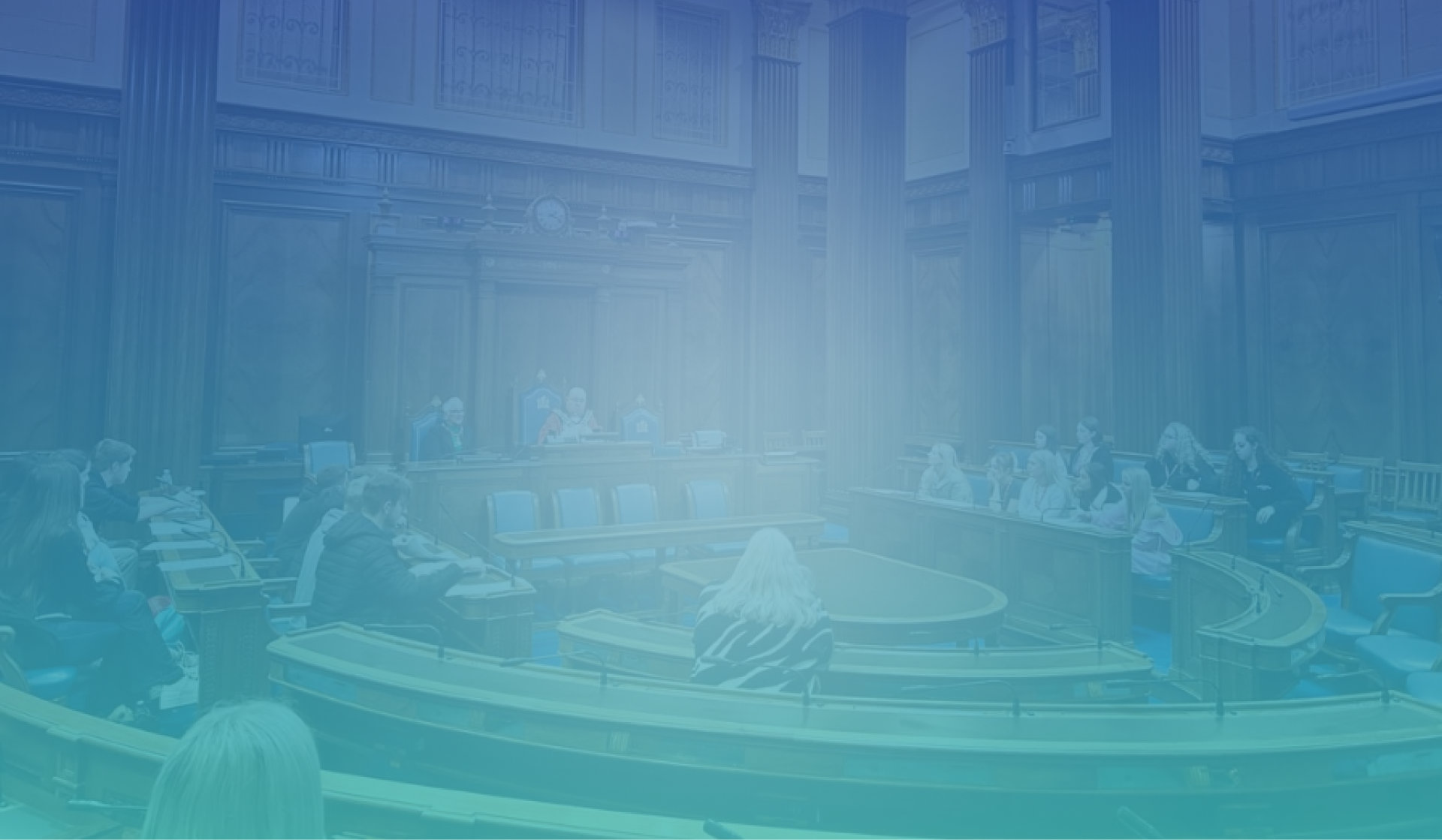
Battle of the Barristers brings real cases to life and puts you in the middle of the action.
People leave seeing how the same evidence can tell very different stories.
Real crimes. Real evidence. More than one way to see it.

Battle of the Barristers isn’t about legal knowledge or putting on a performance. It’s about what happens when people are given the same information and come to very different conclusions.
Using real criminal cases, you’re drawn into a situation where the outcome once mattered. The evidence isn’t always clear. Different interpretations feel equally convincing. Confidence can carry weight, even when the facts don’t fully support it. What feels obvious at first can start to shift as the story unfolds.
Because the case isn’t personal, people relax into it. They speak up, change their minds, and start to notice how they’re forming opinions in real time. You see how quickly a narrative can take hold, which voices influence the room, and how easy it is to go along with something without fully questioning it.
The courtroom is just the setting. What people take away goes far beyond it.
For some groups, it builds confidence to speak up. For others, it opens up conversations about fairness, influence and how we respond to what we’re told. For many, it’s simply a moment of realisation that things aren’t always as straightforward as they seem.
No two sessions are the same. They’re shaped around the people in the room, and what they want to get from it.

Battle of the Barristers
Battle of the Barristers
What?
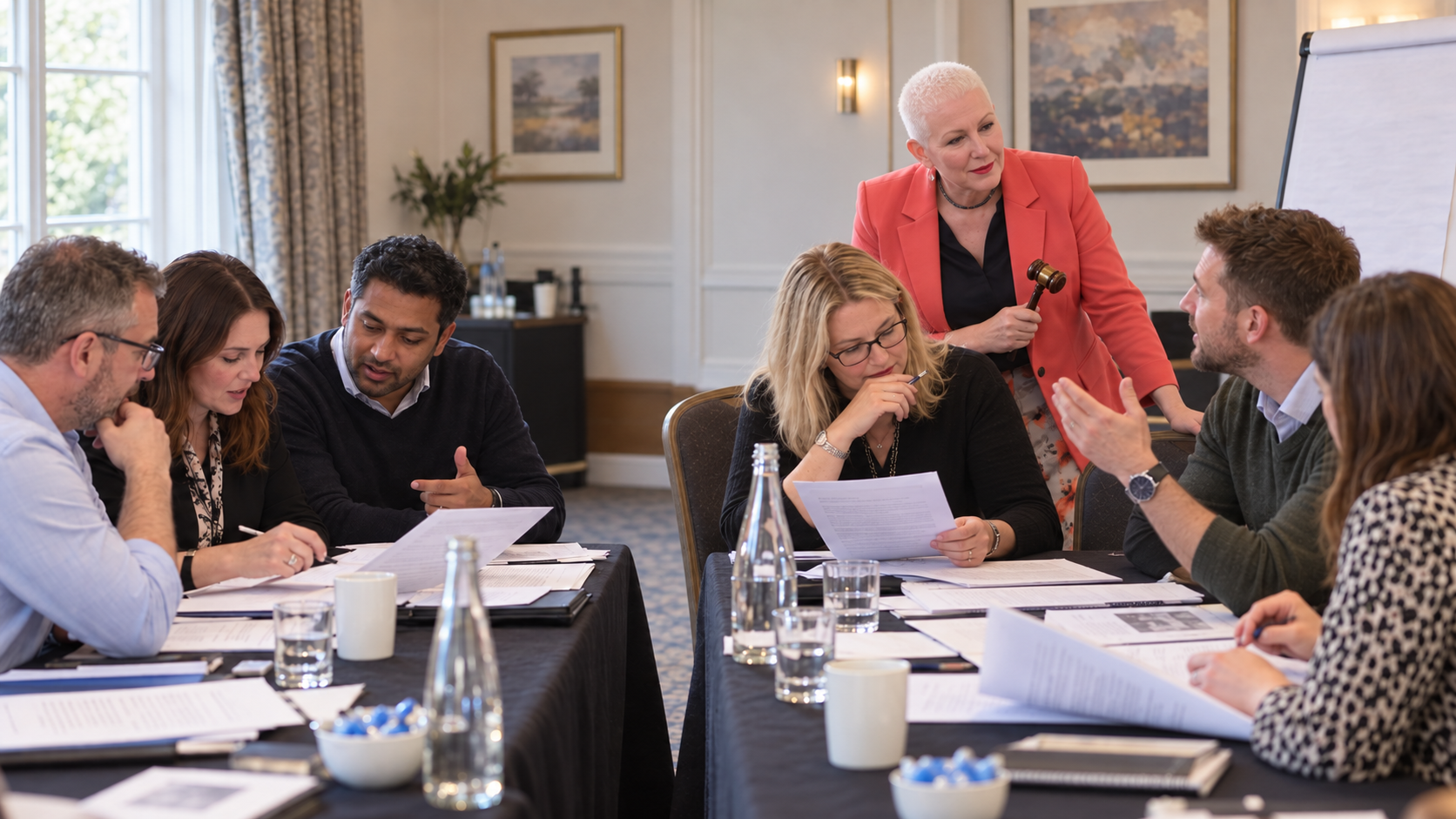
Battle of the Barristers is a facilitated, courtroom-style decision simulation based on a real criminal case. Participants work in opposing teams to examine evidence, challenge perspectives and build arguments before reaching a verdict.
The simulation creates a unique environment where decisions must be justified, assumptions are tested and different viewpoints are explored. Because the case is separate from participants’ own organisation, discussions remain open and constructive.
Following the simulation, a structured analysis session explores how participants approached evidence, handled uncertainty and responded to challenge. These insights are then connected to organisational decision-making, including leadership, governance and risk.
Who?
Battle of the Barristers is designed for boards, trustees, school leaders, governors and teams responsible for making important decisions under pressure.
The experience helps participants understand how they assess information, challenge assumptions and reach collective decisions when there is no perfect answer. Rather than focusing on the outcome of the case, the emphasis is on the decision-making process.
Through facilitated reflection, participants gain insight into their own behaviours, communication styles and team dynamics, helping strengthen confidence in their organisation’s decision-making culture.
How?
We provide all materials, guidance and facilitation required to deliver each Battle of the Barristers session. Our team manages the experience from start to finish, ensuring participants can fully engage with the challenge.
Sessions can be delivered at your own venue or at an alternative suitable location arranged with our support. Each experience is designed around practical participation, discussion and reflection.
Both half-day and full-day formats are available, with flexible options depending on group size, objectives and the type of event you are planning.
When?
Each Battle of the Barristers experience typically lasts between three and four hours and can be scheduled as either a morning or afternoon session.
The format is flexible and can be adapted to suit your organisation’s needs, whether as a professional development activity, leadership session, team-building event or fundraising experience.
Sessions can also be delivered outside standard working hours, including evenings and weekends, making it suitable for a wide range of organisations and events.

Evolve3 CIC had a huge impact on our team. The skills we applied during their Barristers workshop were both varied and numerous, but we didn’t even notice they (or we) were being ‘developed’. We just had an afternoon of fascination and fun.
The team hasn’t stopped talking about it since - we can’t wait to do another one.
~ Lisa Milburn, CFWD
Let’s start a conversation.
Whether you’re a school, charity, community group or business, tell me what you’d like to explore and I’ll build a session around it.
- Battle of the Barristers courtroom experiences
- Charity solutions and team workshops
- AI scrutiny and critical-thinking training
- Gamification and interactive learning